

Interior accessories
Internal accessories turn the approved wardrobe layout into practical daily storage. Each organizer must be checked against cabinet width, depth, door clearance and the items it is intended to hold.

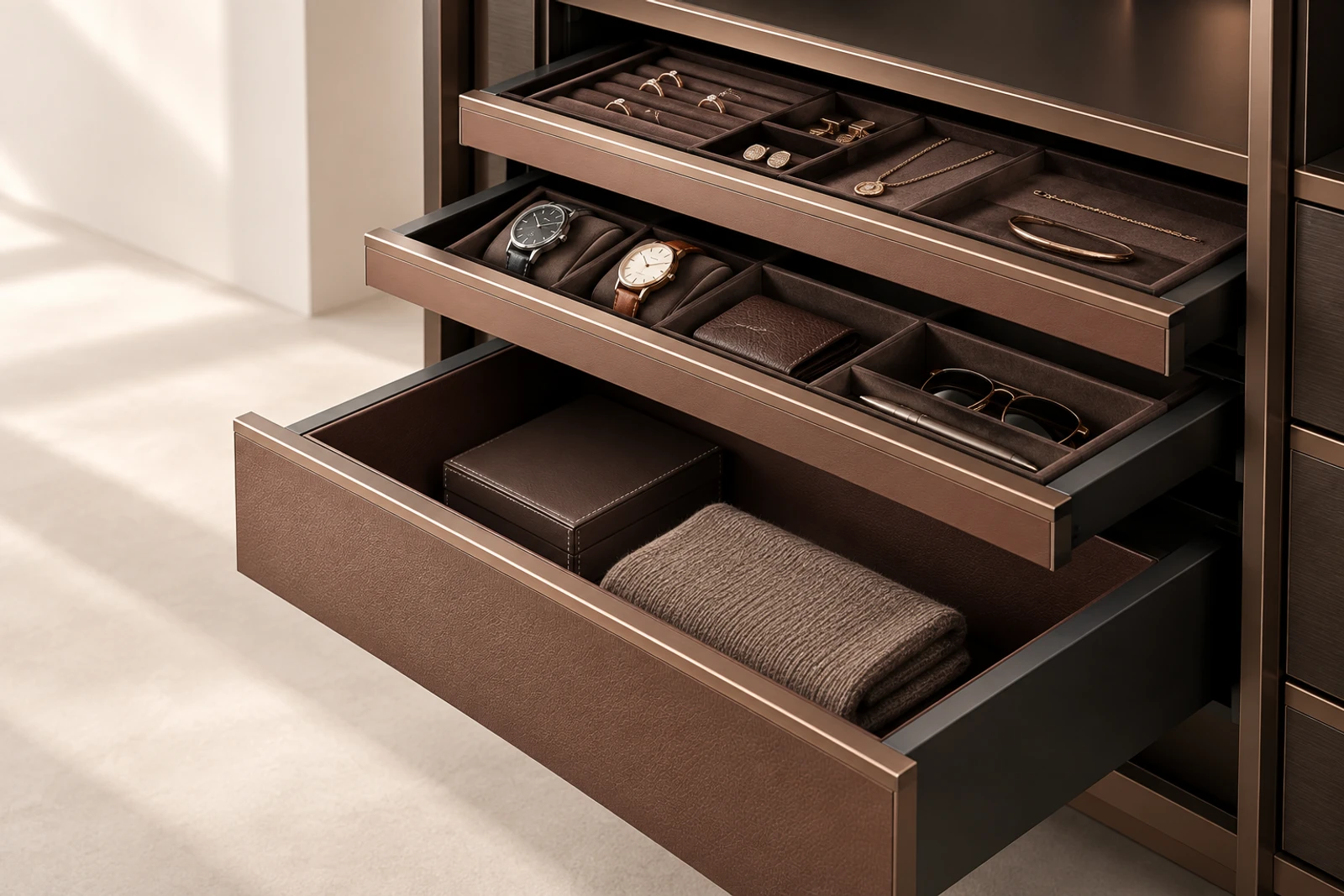
Organize the inside around daily use.
Select the storage task before the accessory. Each fitting is then checked against the approved cabinet dimensions and door movement.
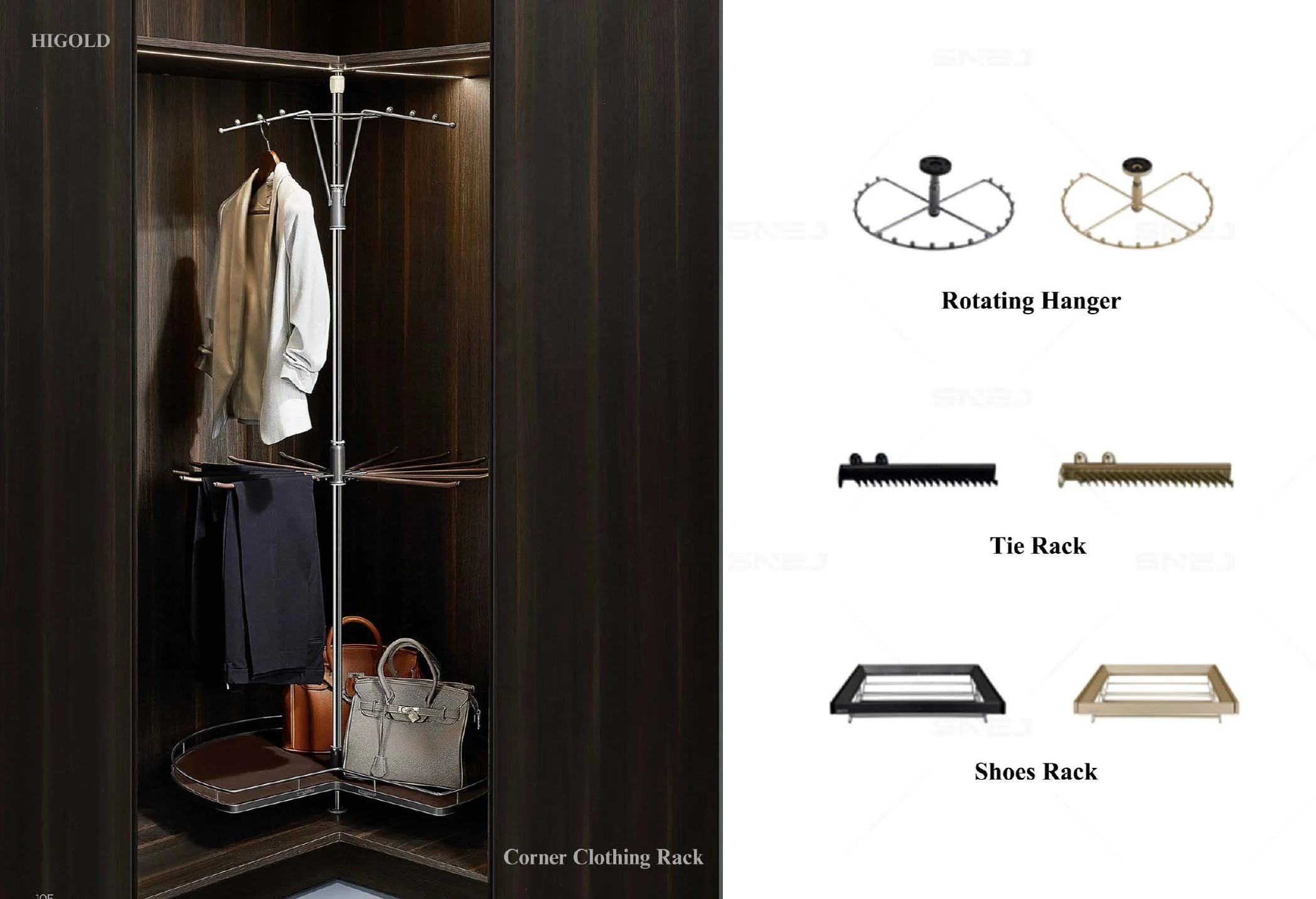
Hanging and corner storage
Corner rails, rotating hangers, tie racks and shoe storage.
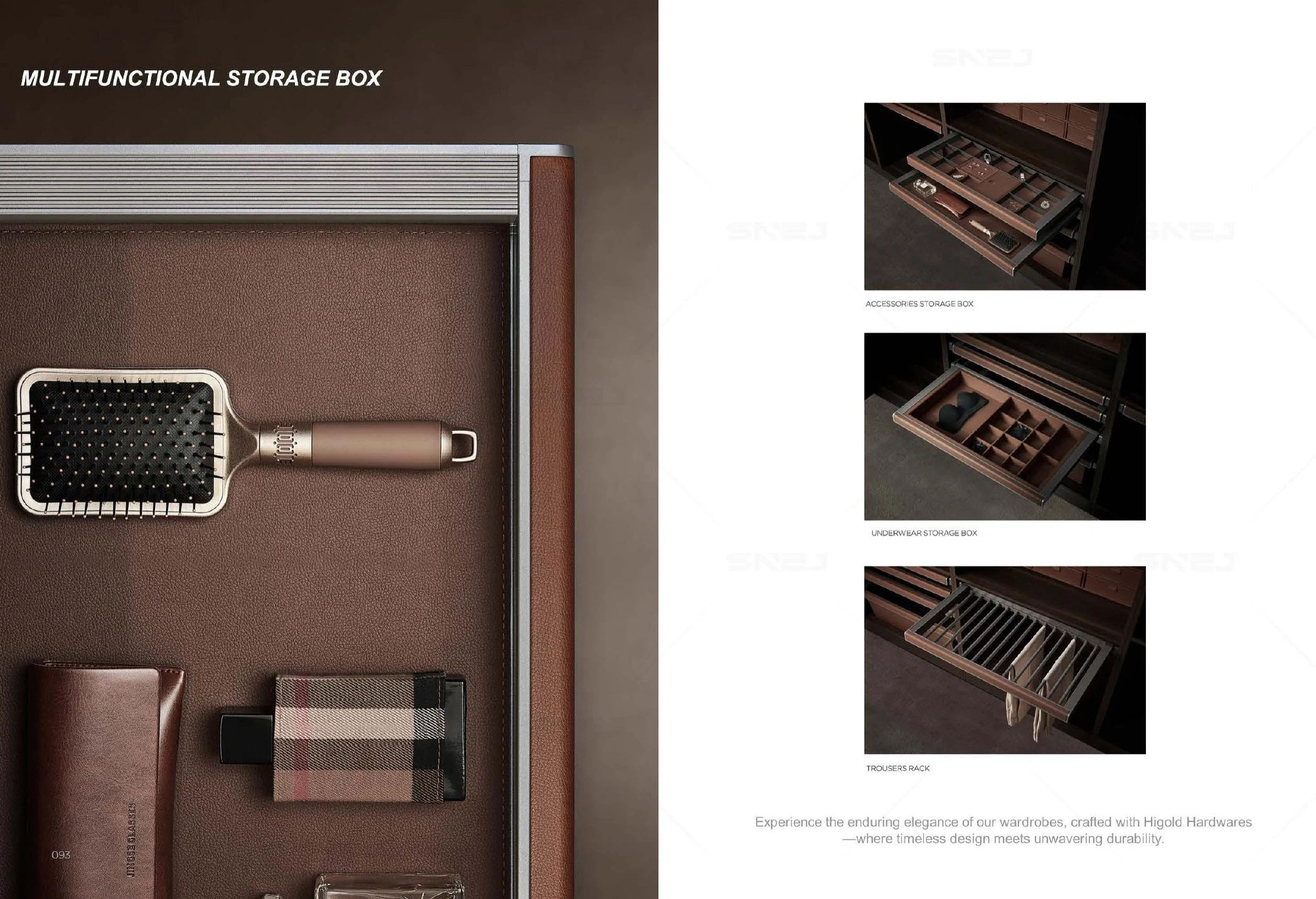
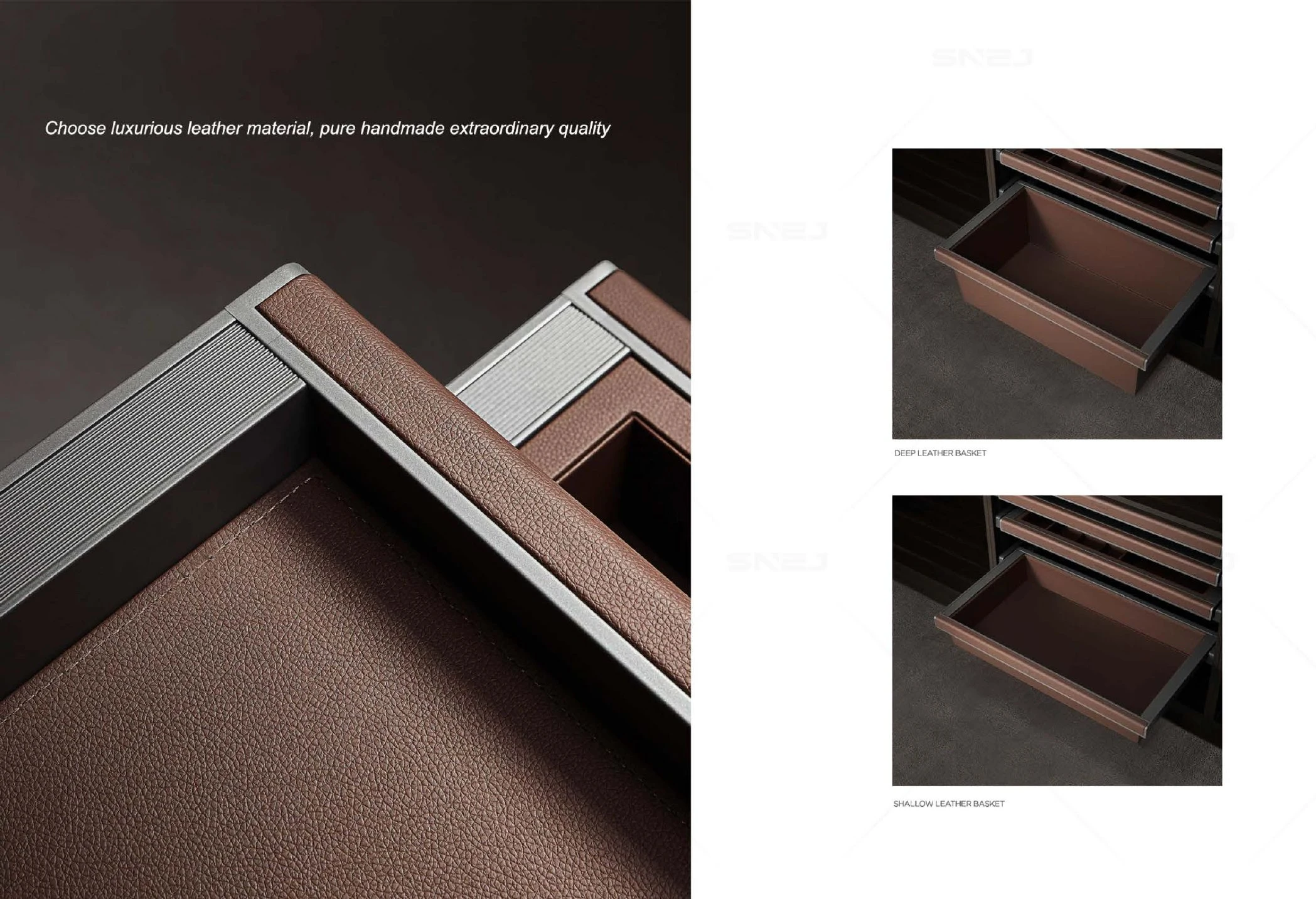
Drawer organizers and schedules
Storage boxes, trays, material details and reference dimensions.
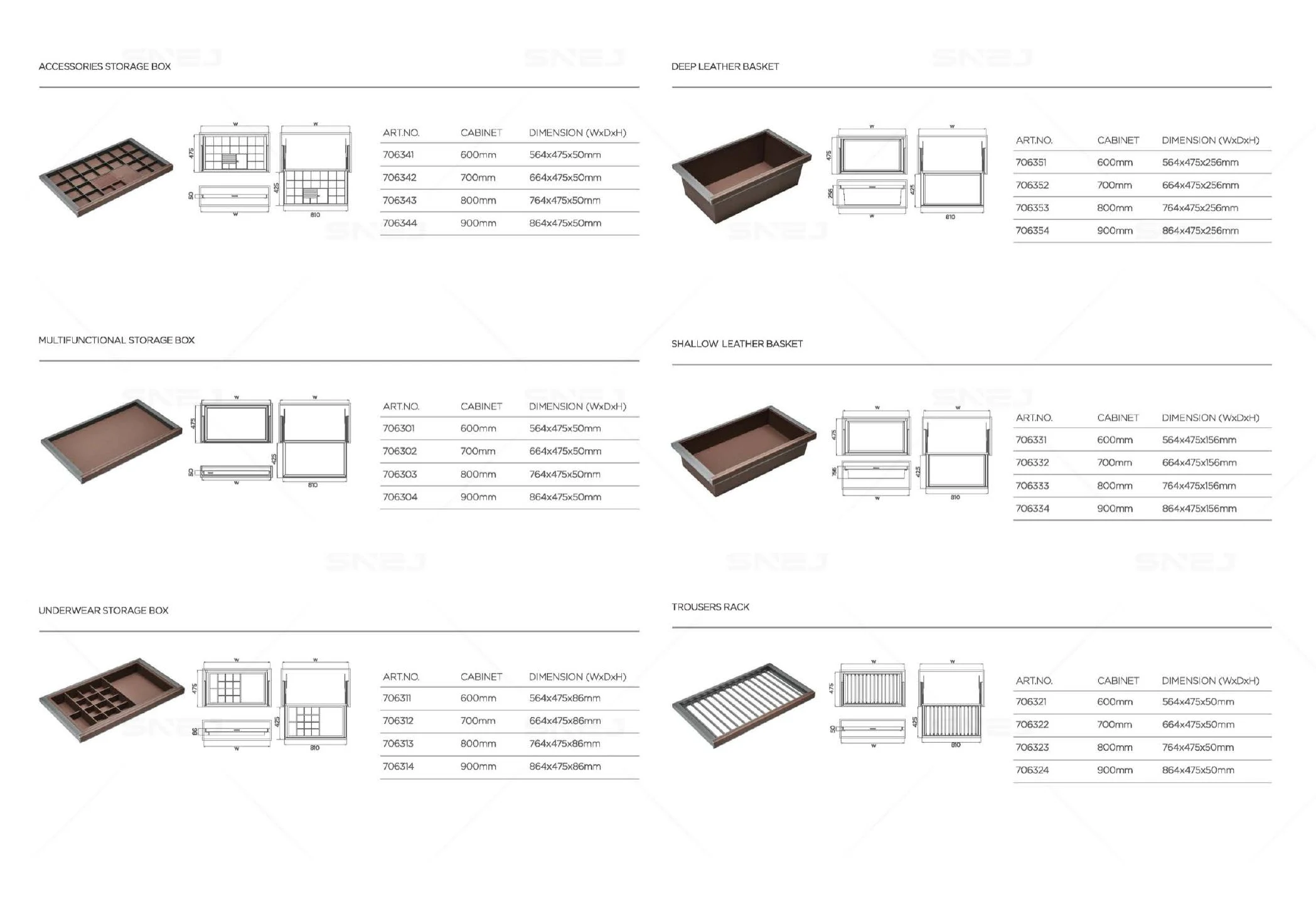
Check every fitting against the cabinet.
Storage task
Begin with what must be stored and how often it is used, then select the most direct organizer.
Cabinet compatibility
Check clear internal width, depth, mounting position and door movement before confirming each fitting.
Finish coordination
Coordinate metal, leather-look and timber finishes with the wardrobe interior and visible door hardware.
What we need before quoting.
- Approved internal wardrobe layout and dimensions
- Accessory type and quantity for each wardrobe
- Drawer, door and hanging clearances
- Preferred metal and organizer finishes
- Final room-by-room accessory schedule
Common questions about accessories.
Should accessories be selected before the wardrobe layout?
Storage priorities can be discussed early, but final accessory selection follows the internal layout so widths, depths and clearances can be verified.
Are the catalogue dimensions final for every project?
They are reference dimensions. Compatibility must be checked against the selected fitting and the approved cabinet construction before ordering.
Can different rooms use different accessory packages?
Yes. Accessories can be scheduled by room, unit type or buyer package while the external wardrobe design remains coordinated.